


I want to be a good chef
Two important factors influencing my goals are my children and my mother. Firstly, I am currently the mother of two children. My life has changed dramatically as I became a mother after I married. I started to be interested in cooking, health, and the well-being of my children. I started to identify better organic ingredients and studied cooking equipment and ingredients. Also, I now enjoy constantly collecting and analyzing healthy and nutritious recipes. Secondly, my mother is the owner-chef of a Japanese restaurant, so I often worked to help her in her restaurant. Working in there included everything from serving, plating, purchasing ingredients, simple cooking, and cashier. These are the starting points of my cooking life.
Culinary is my life
Like the photo above, I am always cooking in real life. I enjoy not only Korean food, but also Japanese cuisine. Also, I am learning baking for the first time this fall semester, which is very interesting. Finally, I want to learn a variety of dishes and expand my cooking range.
Blog 3: Diets and Dietary Restrictions
1. Examples of typical daily menus
-
Breakfast: Fruits (apple, orange, or Banana), Vegetables (tomato or lettuce), and Nuts, Coffee (café latte), Water
-
Lunch: Rice (mixed rice: quinoa, sprouted brown and black rice, and white rice), Soup (e.g. Seaweed soup with seafood or radish soup with chopped beef), Side dishes (Kimchi, beans, seaweed, etc.), Water
-
Snack time: Milk or Coffee, and Pie or Cookies, or Yogurt
-
Dinner: Noodles (pasta or ramen) or Rice cake soup, Wine (red or white), Tea (green or barley tea), Water
⇨ I usually eat fruits and vegetables for breakfast, rice and side dishes
for lunch, and noodles or simple soups (sometimes chicken or pizza)
for dinner.
2. Diet Choices & Records for 2 days
I Chose a Semi-vegetarian diet type of the dietary concepts discussed in class for this assignment because this diet can contain red meat, poultry, and fish occasionally, and I can still eat eggs and dairy products. A vegan diet that doesn't eat all the meat, fish, eggs, and dairy is a difficult challenge for me; since this is my first time on a diet, so I would like to start with a Semi-vegetarian diet.
1) Day 1
-
Breakfast: Apple, Banana, Americano coffee, Water
-
Lunch: Vegetable Bibimbap (lettuce, radish, pumpkin, bean sprouts, spinach, seaweed, quinoa rice, and egg), Kimchi, Water
-
Dinner: Green salad, Grilled tofu with soy sauce, Water
2) Day 2
-
Breakfast: Extracted tomato juice, Orange, Boiled egg, Water
-
Lunch: Avocado Rice (butter, eggs, seaweed, and soy sauce), Yogurt Salad (Balkan yogurt, cucumber, radish), Miso soup, Apple juice, Water
-
Dinner: Rice noodle (Green bean sprouts, shiitake mushrooms, bok choy, onions, green onions), Kimchi, Water
3. Vegetable Bibimbap: 4 portions
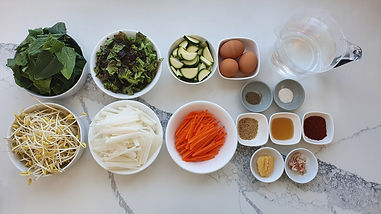
1) Ingredients (Yield: 3 servings)



-
White rice: 400g, Quinoa: 200g, Water
-
Spinach: 250g/ Fresh bean sprouts; 200g/ Water: 2000ml (for blanching)
-
Korean lettuce: 50g
-
Fancy zucchini: 163g/ Salted shrimp Crevette Salee: 10g/ Water: 100ml
-
Carrot: 190g/ Radish: 400g
-
Sesame oil: 7g/ Sesame: 10g
-
Korean chili powder: 10g
-
Garlic: 23g (minced)
-
Eggs: 3pcs
-
Salt & Ground black pepper: To taste
-
Sauce: Gochujang (37g) or soy sauce (15g)
-
seaweed: 5g
2) Recipes
① Wash rice thoroughly several times in running water and soak in cold water for about an hour. Rinse and strain using a fine mesh. Mix rice and water and put in a rice cooker. (Time setting: Sticky multi-grain 46 minutes).


② Remove unnecessary stems from spinach and fresh bean sprouts and rinses them under cold running water, dry with a salad spinner. Cut the spinach and fresh bean sprouts into 6cm-8cm. Blanch the bean sprouts (3 minutes) and spinach (1 minute) in salt boiling water and bathe them in ice water. Add salt, pepper, and garlic and mix.
* Don't overcook Bean sprouts and spinach for their crispy texture.


③ Clean the lettuce, dry it in a salad spinner and cut it into bite-sized pieces.

④ Clean the fancy zucchini and trim it. Cut it in half lengthwise and cut into a half-centimeter. Put fancy zucchini and salted shrimp in a small pot and add water. Boil them over medium heat for 5 minutes. Reduce the heat and braise it, add the chili powder, minced garlic, sesame oil, and sesame seed.


⑤ Wash and peel the carrots and radish, and cut into Brunoise (3mm* 3mm *3mm). Combine red pepper powder, garlic, sesame oil, salt, and sesame seeds to the radish and mix. Heat the sauté pan over medium heat and add olive oil and carrots. Stir-fry until cooked.


⑥ After all the ingredients are ready, fry three eggs with vegetable oil over medium heat. (Eggs are optional).


3) Plating


4. Food allergens
Vegetable Bibimbap includes seafood (fancy zucchini: salted shrimp), sesame seeds, and sesame oil (bean sprouts, spinach, fancy zucchini, gochujang sauce, soy sauce), and eggs. These ingredients are considered priority allergens in Canada.
1) Sesame allergy
Vegetable Bibimbap contains sesame seeds and sesame oil; they are added to zucchini, bean sprouts, spinach, radish, and red pepper paste, and soy sauce. If I have a sesame allergy, I will replace it with walnut oil, olive oil, canola oil, or avocado oil. Walnut oil is suitable as a seasoning for Asian cuisine, and extra virgin olive oil can be used for a strong flavor; canola oil is a neutral oil that does not have a strong taste and is a substitute for light sesame oil. Avocado oil provides a creamy flavor. Also, instead of sesame seeds, I can use poppy seeds, flax seeds, and sunflower seeds, and chopped walnuts or peanuts can be used as a garnish for plating.
2) Egg allergy
The egg is an option in my vegetable bibimbap, so if I have an egg allergy, I can omit or replace it; for example, I can use tofu instead of eggs after cooking 1 cm cube-shaped tofu in olive oil until golden brown. Eggs make the Bibimbap softer and add to balance all ingredients, while grilled tofu will maximize the crispy texture and savory flavor of this dish.
3) Seafood allergy
When cooking fancy zucchini, I used salted shrimp for its seasoning and umami. If I'm allergic to seafood, I'll use salt or soy sauce instead of salted shrimp or mix them. Mixing salt and soy sauce is a good option, as only soy sauce can make the color cloudy. Besides, for the deep flavor of salted shrimp, I can replace it with Miso soybean paste.
5. Reflection
Getting to know my daily diet and planning a specific diet was a very meaningful experience for me. I was always thinking about a healthy and varied diet, but I have never practiced a specific diet for a certain time. For this assignment, I planned a semi-vegetarian diet and tried to keep it successful for a week. Specifically, I minimized red meat in my diet and used minimal fish sauce or salted shrimp for seasoning. The part I was most worried about in this diet was the lack of protein; however, tofu, beans, and eggs were excellent sources of protein. The semi-vegetable diet gave me a feeling of fullness and was digested very well. Besides, I started to exercise regularly as well as a semi-vegetable diet; my life's priorities were nutrition and health over the past week. As a result, I was very pleased with the semi-vegetarian diet because it has improved my mental health as well as my physical health; I prioritized the quality of the food over its quantity. This diet and regular exercise allowed me to sleep deeply and gave me emotional stability. Therefore, I will continue to stick with this diet and gradually try the Lacto-ovo-vegan diet.

